Upper Blepharoplasty Beverly Hills
Your upper lids have started resting on your lashes. Eyeshadow disappears into the fold, your brow does work it was not built for, and the heaviness arrives by mid afternoon whether you slept or not. Upper blepharoplasty removes the excess skin causing it.
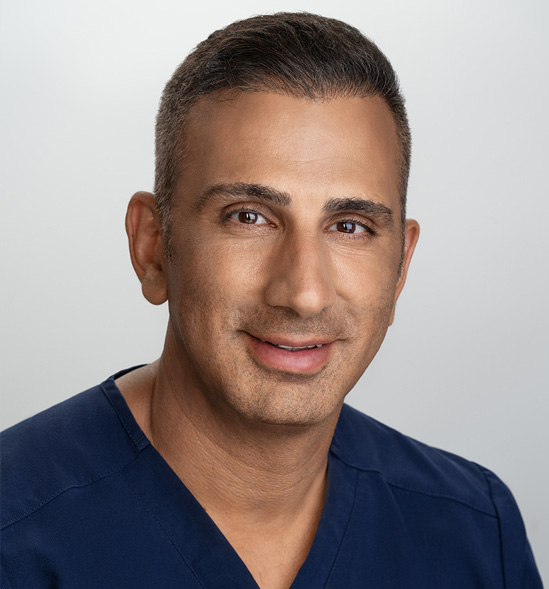
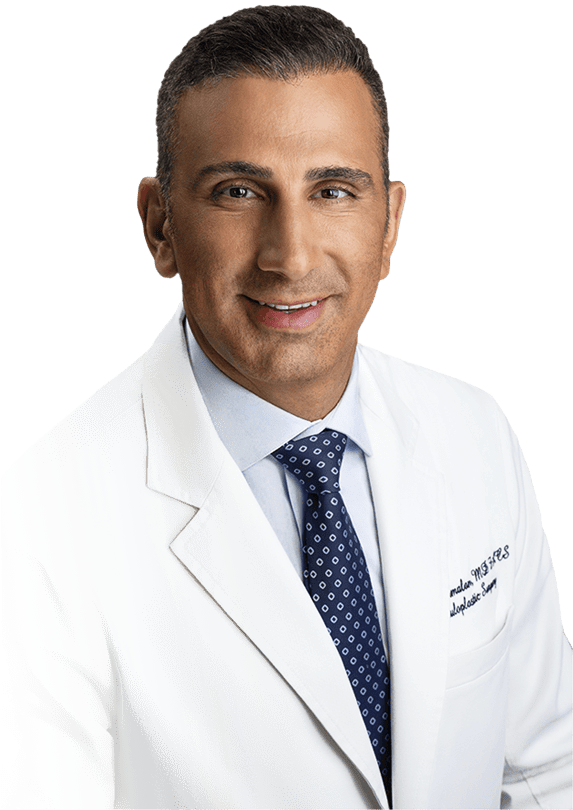
Dr. Christopher Zoumalan is board-certified in ophthalmology and ASOPRS fellowship-trained, with 20 years spent on eyelids and nothing else. He examines the eye beneath the lid before touching the lid itself, because skin is not always what is heavy.
Find out in one unhurried appointment whether upper eyelid surgery is right for your anatomy.
Or call 310.278.4000
What Is Upper Blepharoplasty?
Upper blepharoplasty, also called an upper eyelid lift, is a cosmetic surgical procedure that removes loose skin and, where appropriate, a small amount of fatty tissue from the upper eyelid. The incision sits inside the natural crease of the lid, so the healed line hides in the fold when your eyes are open.
Upper eyelid surgery addresses:
- Excess skin, drooping and hooding that folds over the lash line
- An upper eyelid crease that is partly or completely hidden
- Puffiness and fine wrinkles across the lid
- Vision obstruction, when the skin blocks the upper visual field
- Difficulty applying makeup on the lid platform
What the procedure preserves matters as much as what it removes. Dr. Zoumalan leaves the muscle and the deep fat behind it intact, because an eyelid stripped of volume reads as surgical. Fat preservation is what separates a natural-looking upper lid from a hollow one. The goal is a refreshed, more youthful eyelid crease that still reads as your own eye.
What are the Benefits of Upper Eyelid Surgery?
Upper blepharoplasty offers both aesthetic and functional advantages, rejuvenating your eyes while enhancing overall comfort and confidence.
Eliminates Hooded, Drooping Eyelids
Excess upper eyelid skin can create a heavy, hooded look that makes you appear tired. Upper blepharoplasty removes sagging tissue to reveal a more open, refreshed eye shape. The procedure is tailored to your anatomy, addressing both mild drooping and pronounced hooding while restoring your natural eyelid contour.
Restores a Youthful, Refreshed Appearance
Upper blepharoplasty softens wrinkles, reduces puffiness, and refines eyelid definition, helping you look 10–15 years younger. Dr. Zoumalan’s conservative technique ensures results that appear naturally youthful rather than surgical. Your eyes become brighter and more vibrant without altering your unique features.
Improves Vision and Daily Function
Significant eyelid hooding can obstruct peripheral vision, affecting activities like driving or reading. By removing excess skin, upper blepharoplasty restores a clear field of sight while enhancing appearance. Many patients notice immediate visual improvement—combining functional and cosmetic benefits in one procedure.
Creates Subtle, Natural-Looking Results
Dr. Zoumalan’s oculoplastic expertise ensures refined results that maintain natural eyelid anatomy. The surgery enhances your eyes without an overdone look, with incisions hidden in natural creases for nearly invisible scars. Most patients simply appear well-rested and refreshed.
Delivers Long-Lasting, Durable Outcomes
Results from upper blepharoplasty often last 10–15 years or longer. The procedure permanently improves eyelid structure, ensuring you continue to look younger even as aging progresses. Many patients never require revision, making it a long-term investment in lasting rejuvenation.
Take the next step toward brighter, refreshed eyes and experience the natural, transformative results of Dr. Zoumalan’s expertly tailored upper eyelid surgery.
Ideal Candidates for Upper Lid Blepharoplasty
- Age and health: Most patients are between 25 and 70. Anatomy decides candidacy, not age. Candidates should be in good general health, free of conditions that impair healing, and either non-smokers or willing to quit before and after surgery.
- Cosmetic concerns: Hooded eyelids, sagging skin, puffiness, asymmetry between the two lids, and a tired appearance that does not match how you feel. Male upper eyelid surgery follows different rules, since a lower brow and a narrower pretarsal show call for less skin removal in male upper blepharoplasty, and male blepharoplasty covers that in detail.
- Functional concerns: Sometimes this is not cosmetic at all. When excess upper eyelid skin obstructs the superior visual field and peripheral vision, the case crosses into reconstructive eyelid surgery. Vision comes first.
- When blepharoplasty is not the answer: Dermatochalasis is excess skin, and blepharoplasty removes it. Blepharoptosis is a droopy eyelid caused by a stretched levator muscle, the levator palpebrae, and only ptosis repair corrects it. Operating on the skin alone in a patient with ptosis leaves the eye as tired as it started.
Dr. Zoumalan conducts comprehensive examinations to ensure upper blepharoplasty will achieve your goals. If needed, he'll recommend alternative treatments or address any health concerns before proceeding with upper eyelid surgery.
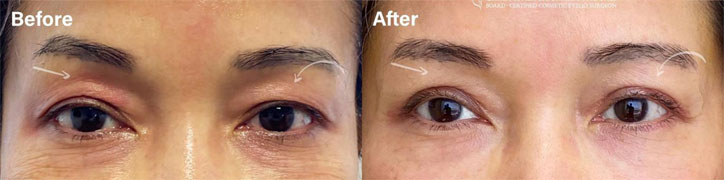
Upper lid blepharoplasty with fat repositioning
Beautiful UPPER EYELID BLEPHAROPLASTY in a patient of Asian decent. She has pre-exisitng upper lid creases at a height she was happy with, so we did not have to perform a double eyelid or Asian eyelid surgery. An UPPER LID BLEPHAROPLASTY WITH FAT REPOSITIONING was performed to 1) improve her excess upper lid skin 2) improve her eyelid asymmetry and 3) mobilize and reposition her upper eyelid excess fat to improve the volume loss she had in her upper eyelids. The STRAIGHT ARROW denotes the area of fat repositioning and how the hollowing improved post surgery, and the CURVED ARROW demonstrates the improvement from excess skin removal! Her after photo was taken 2 months post surgery and, although she has healed remarkably well so far and most of her swelling has resolved, she still has some very minor swelling and will continue to heal with time. This is not a procedure where fillers alone or just removing excess skin would have helped entirely.
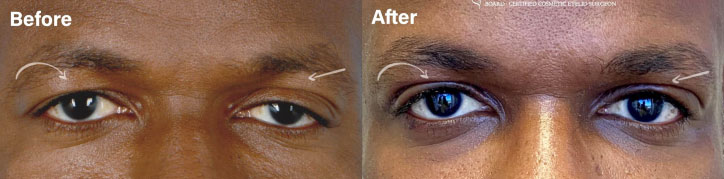
Upper lid blepharoplasty and ptosis repair
Beautiful before and after of an UPPER LID BLEPHAROPLASTY AND PTOSIS REPAIR. This was a tough case where he presented with some fairly significant asymmetry between the two eyes. An upper eyelid surgery was performed to help balance the eyes. His left eyelid’s main issue was ptosis aka droopy eyelid, whereas the right upper lid had excess skin. Two different issues seen in two separeate eyelids in the same patient. He underwent an in office procedure to correct both issues at the same time, and here he is just a few weeks out of surgery and looking fantastic already.
The Upper Blepharoplasty Process
From first appointment to final result, the process runs in three stages. Most patients are back in public within two weeks, though the incision keeps refining for months afterward.
Your Upper Blepharoplasty Consultation
Dr. Zoumalan sees you himself, unhurried, for roughly an hour. He examines the eyelid skin, the brow position, the lid margin and the tear film, then measures each eyelid independently, since the two are rarely symmetrical. He reviews your medical history, your medications and any prior eye surgery, and shows you before and after photographs of comparable cases.
You leave with an honest account of what surgery will not fix. Realistic expectations are part of candidacy, not a formality.
The Upper Eyelid Blepharoplasty Procedure
Most upper eyelid blepharoplasty cases run in the Beverly Hills office under local anesthesia, with oral sedation available. Complex cases, and cases combined with other procedures, run as an outpatient procedure under sedation or general anesthesia at the Innovate Surgery Center, the Quad A accredited facility Dr. Zoumalan co-founded in the same building.
During the procedure:
- The incision is marked and placed inside the natural eyelid crease
- Excess skin is removed conservatively, measured against your eyelid platform
- Fat is preserved, or repositioned into a hollow above the lid where needed
- The lid is closed with fine sutures
You stay awake and comfortable. Being able to open and close your eyes during surgery helps the surgeon judge symmetry, and no patch is used, so vision stays intact from the moment you leave.
Upper Eyelid Blepharoplasty Recovery Timeline
- Days 1 to 3. Swelling and bruising build, then start to settle. Cold compresses help. Temporary dryness or tightness is common.
- Days 5 to 7. Sutures, or stitches, come out. Most patients feel presentable enough to return to desk work.
- Weeks 2 to 3. Makeup goes back on, contact lenses go back in, and normal activity resumes. Exercise usually waits until week three.
- Months 1 to 3. Residual swelling resolves and the incision fades toward a fine line. Aftercare instructions cover every stage.
Results commonly last ten years or longer, though the eyelids continue to age. Dry eye symptoms, when they occur, are usually temporary and managed with drops.
Individual results may vary. Outcomes depend on age, skin quality and healing.
Bring your questions and, if you have them, photographs of yourself from ten years ago.
Combining Upper and Lower Blepharoplasty with Other Procedures
Many patients treat the whole eye area in one sitting. Dr. Zoumalan will tell you at consultation whether combining makes sense for your anatomy.
Lower blepharoplasty addresses the under-eye bags, puffiness and hollowing that upper lid work does not touch. Dr. Zoumalan repositions fat rather than removing it, which is what keeps the lower lid from looking hollow afterward.
Upper and lower blepharoplasty performed in one session. You get a single recovery period and one anesthesia event, and the result reads as balanced rather than a refreshed upper lid sitting above an untreated lower one.
When a low brow pushes skin down onto the lid, lifting the brow means less eyelid skin has to come off. This pairing suits patients whose hooding is coming from brow position rather than from the eyelid itself.
Other Cosmetic Procedures
Patients seeking broader rejuvenation can combine upper blepharoplasty with other surgeries such as facelift, necklift, or rhinoplasty. Dr. Zoumalan works closely with board-certified specialists to deliver coordinated, natural-looking results.
Upper Blepharoplasty Cost & Financing in Beverly Hills
Upper blepharoplasty cost depends on your anatomy, on whether ptosis repair or lower eyelid surgery is combined with the skin removal, on the anesthesia your case calls for, and on whether the procedure runs in the office or at the accredited surgery center. Published averages account for none of that. Dr. Zoumalan’s Patient Care Coordinator prepares a written quote for you before your consultation, with no surprise fees.
Financing Through PatientFi and Insurance Coverage
The practice offers zero-interest payment plans and flexible monthly options through PatientFi, with a quick approval process. Insurance does not cover cosmetic eyelid surgery.
Send photos and get an initial read from Dr. Zoumalan before you travel.
Why Choose Dr. Zoumalan for Upper Eyelid Surgery?
Choosing the right surgeon for eyelid surgery is mostly a question of how narrow the practice is. A general plastic surgeon operates across the whole body, from facelift to body contouring. Dr. Zoumalan operates on eyelids.
- Exclusive specialization: The practice performs cosmetic eyelid surgery and nothing else. Upper blepharoplasty is not one procedure among dozens here.
- Credentials and subspecialty training: Dr. Zoumalan is board-certified by the American Board of Ophthalmology and completed an ASOPRS fellowship in oculoplastic surgery. No board certification in oculoplastic surgery exists. The ASOPRS fellowship is the recognized subspecialty credential, and only a handful of surgeons hold it.
- Experience: Over 20 years and more than 9,000 procedures, refined into a technique he now teaches to other physicians.
- Natural results philosophy: Natural Looking Blepharoplasty® is his trademarked approach, favoring conservative skin removal and fat repositioning over excision.
- Academic and hospital standing: A Fellow of the American College of Surgeons (FACS), a member of the American Academy of Ophthalmology Patients travel to the Camden Drive office from Santa Monica, West Hollywood and across Southern California.
Discover why patients across Beverly Hills trust Dr. Zoumalan for natural, lasting upper eyelid rejuvenation.
Ready for Natural Upper Eyelid Rejuvenation with Dr. Zoumalan?
Upper blepharoplasty is one of the few procedures where doing less produces the better result. Dr. Zoumalan removes only the skin that has to go, preserves the volume that keeps a lid looking young, and hides the incision inside your own crease. Most patients are back in public within two weeks, and the people around them notice only that they look rested.
Take the next step toward brighter, rested eyes with a private consultation at the Camden Drive office.
Or call 310.278.4000
Frequently Asked Questions About Upper Eyelid Lift Surgery
How much does upper blepharoplasty cost in Beverly Hills?
Cost depends on complexity, anesthesia type, facility and whether other procedures are combined in the same session. PatientFi financing with zero-interest plans is available.
Where can I see upper blepharoplasty before and after photos?
Dr. Zoumalan posts recent cases on Instagram, where upper blepharoplasty before and after results appear alongside short explanations of what was done. The site also holds a fuller before and after gallery of consented cases, including male upper blepharoplasty results. Individual results vary, and outcomes depend on age, skin quality and healing.
Will I have visible scars after upper eyelid surgery?
The incision is placed inside the natural eyelid crease, so the healed line sits in a fold that is hidden when your eyes are open. Scarring is minimal, and scars typically fade to a fine line over three to six months. Dr. Zoumalan developed Skinuva Scar, a silicone-based scar cream, and most patients use it through the healing phase to support how the incision settles.
Am I a good candidate for blepharoplasty of the upper eyelid?
Good candidates have excess upper eyelid skin or hooding, are in good general health, and hold realistic expectations. Most are between 25 and 70, but anatomy decides rather than age. Younger patients with inherited hooding sometimes benefit early, and older patients in good health do well.
What are the risks of upper blepharoplasty?
As with any surgical procedure, upper blepharoplasty carries risks including swelling, bruising, infection, dry eyes, temporary light sensitivity, asymmetry and, rarely, lagophthalmos or incomplete lid closure. Serious complications are uncommon when the procedure is performed by a fellowship-trained oculoplastic surgeon. Dr. Zoumalan reviews every risk with you before you decide.